

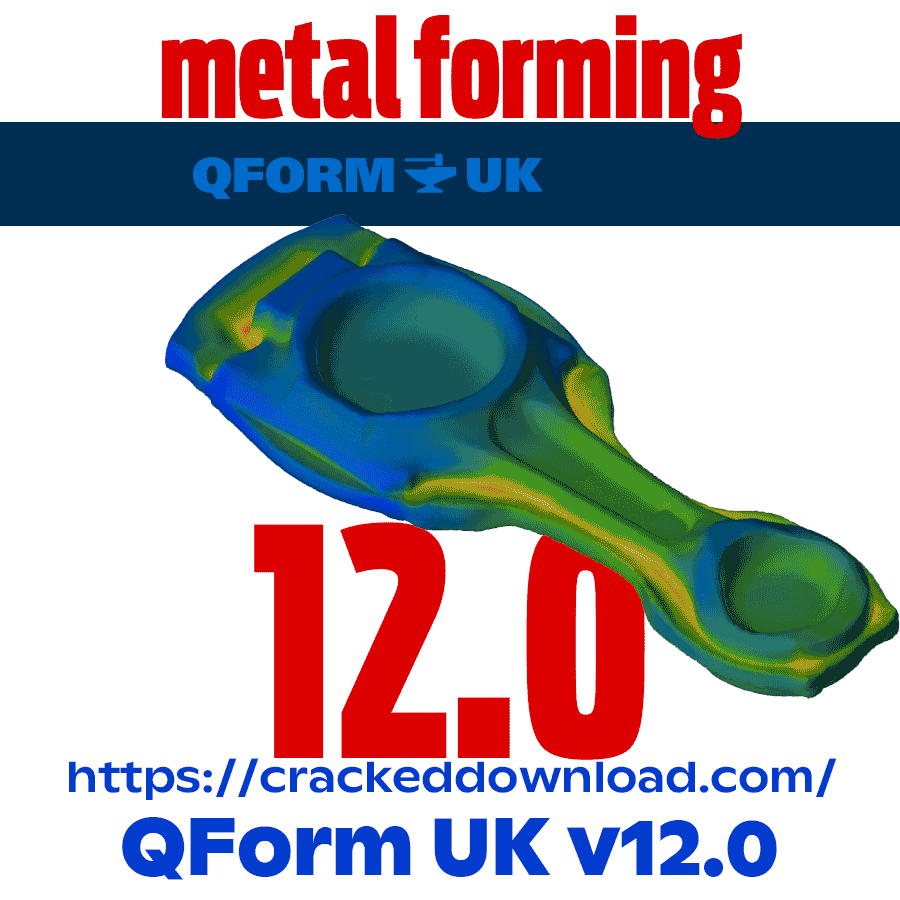
QForm UK v12.0 metal forming simulation
€0.00
QForm UK v12.0 crack license,
QForm UK v12.0 metal forming simulation QForm UK v12.0 crack license download unlimited.
how to find torrent download QForm UK v12.0 crack license working tested. QForm UK: design and simulation solutions for metal forming industries Professional engineering software for design, simulation, analysis and optimization of metal deformation processes
QForm UK v12.0 metal forming simulation QForm UK v12.0 crack license download unlimited.
how to find torrent download QForm UK v12.0 crack license working tested.
QForm UK: design and simulation solutions for metal forming industries Professional engineering software for design, simulation, analysis and optimization of metal deformation processes
QForm UK is a universal program trusted and widely used by researchers, scientists, industrial engineers, and technical specialists. By using accurate numerical simulation, users can predict material flow, final geometry, defects, loads, and process limits at early design stages. This significantly reduces the need for costly physical trials, shortens development time, improves product quality, and increases tool life. Various metal products developed with the help of QForm UK are now used in components and systems that form an integral part of our everyday life.
QForm UK v12.0 crack license Design and simulation with a flexible API and machine learning features
QForm UK is designed for cold, warm, and hot die forging, open-die forging, rolling, profile extrusion, and other specific metal forming processes. The software can be extended with a variety of specialized modules, including microstructure prediction, heat treatment simulation, and user-defined subroutines. A lot of advanced capabilities are implemented through a flexible API, allowing users to customize the program for specific technological tasks and research needs.
QForm UK is used for the development of a wide range of metal forming processes for parts production in the aerospace, defense, automotive, energy, aluminum extrusion, and many other industries. QForm UK combines an intuitive interface with step-by-step initial data, real-time simulation, and clear visualization of results in a separate interface window. No lengthy training is needed to simulate basic processes — get started quickly and work comfortably.
QForm UK v12.0 is a simulation software designed for metal forming processes, helping to model and analyze various types of manufacturing operations like forging, rolling, extrusion, and stamping. Version 12.0 brings improvements and new features to enhance accuracy, usability, and performance. Here’s an overview of the software and its main features in the context of metal forming simulation:
Key Features of QForm UK v12.0 for Metal Forming Simulation:
-
Advanced Simulation Capabilities:
-
Forging: Provides detailed analysis of forging processes, including closed-die, open-die, and axial forging.
-
Rolling: Models strip and plate rolling, simulating material flow, temperature distribution, and residual stresses.
-
Extrusion: Simulates the extrusion process, including both forward and backward extrusion types.
-
Stamping: Can be used to simulate sheet metal forming, analyzing material flow, forming limits, and tool design.
-
-
Improved Material Models:
-
Supports a wide range of material models, including elastic-plastic, viscoplastic, and viscoelastic models, allowing accurate predictions of material behavior under forming conditions.
-
Includes specific material models for metals such as aluminum, steel, titanium, and others.
-
-
User Interface and Visualization:
-
Version 12.0 introduces a more user-friendly interface with intuitive design for setting up simulations and viewing results.
-
Enhanced visualization tools for better interpretation of simulation data, including stress, strain, and temperature contours.
-
-
Tool and Die Design:
-
The software allows users to model tool and die components and simulate how they interact with the metal during forming. This helps identify potential issues like tool wear, material defects, or excessive deformation.
-
Tool wear simulation is improved, helping predict the lifespan of dies and tools in a given production environment.
-
-
Thermo-Mechanical Analysis:
-
QForm incorporates advanced thermo-mechanical coupling, which allows users to simulate the combined effect of temperature and mechanical loading during metal forming processes.
-
Accurate temperature distribution is critical in processes like forging, extrusion, and rolling, as it impacts material flow, final part quality, and tool life.
-
-
Optimization and Process Improvement:
-
The software includes optimization tools for process parameters, which help in designing efficient and cost-effective manufacturing processes.
-
Users can optimize variables such as die shape, material properties, temperature, and deformation rates to improve product quality and minimize defects.
-
-
Multi-Physics Simulation:
-
Integrates multiple physical phenomena, such as heat transfer, material deformation, and friction, to give a comprehensive understanding of the entire metal forming process.
-
Friction models are key to accurate simulations of metal forming, and QForm provides advanced friction modeling capabilities.
-
-
Parallel Processing and Performance:
-
With the introduction of parallel processing in v12.0, simulations can run faster and handle more complex models. This is especially beneficial when dealing with large simulations or multi-step processes.
-
-
Support for Industry Standards:
-
QForm UK v12.0 supports a variety of standard input/output formats, enabling integration with other CAD and CAE tools commonly used in the industry.
-
-
Integration with Other Software:
-
Can be integrated with other software systems, including CAD tools for design and CAM systems for manufacturing. It also supports export to various formats for further processing or analysis.
-
Applications in Industry:
-
Forging Industry: Helping manufacturers of automotive, aerospace, and industrial components to predict material flow, optimize die designs, and reduce the risk of defects like cracks, voids, and misalignment.
-
Steel and Aluminum Rolling: Used to predict and optimize processes in the production of steel and aluminum sheets and strips, which are critical for applications in the automotive and construction industries.
-
Extrusion: Used by companies manufacturing pipes, profiles, and other extruded products to optimize the process and improve product consistency.
-
Stamping and Sheet Metal: Simulations help optimize stamping processes, reducing waste, improving material usage, and enhancing product quality.
Related products


Geology

Cad/Cam

Uncategorized
Uncategorized

Mining Industry

unlimited find

engineering softwares
Uncategorized

Uncategorized
Uncategorized


Science Research
unlimited find

Uncategorized


Mathematical


chemistry software
Uncategorized
Uncategorized

Science Research

Uncategorized

Uncategorized

Geology


Uncategorized

Uncategorized

Simulation

Cad/Cam
Uncategorized
Uncategorized

Science Research
Uncategorized


unlimited find
engineering softwares

Uncategorized

Science Research

scientific software


Uncategorized


Uncategorized


unlimited find


Dental Software
Uncategorized

Mining Industry


Oil and Gas

Uncategorized